
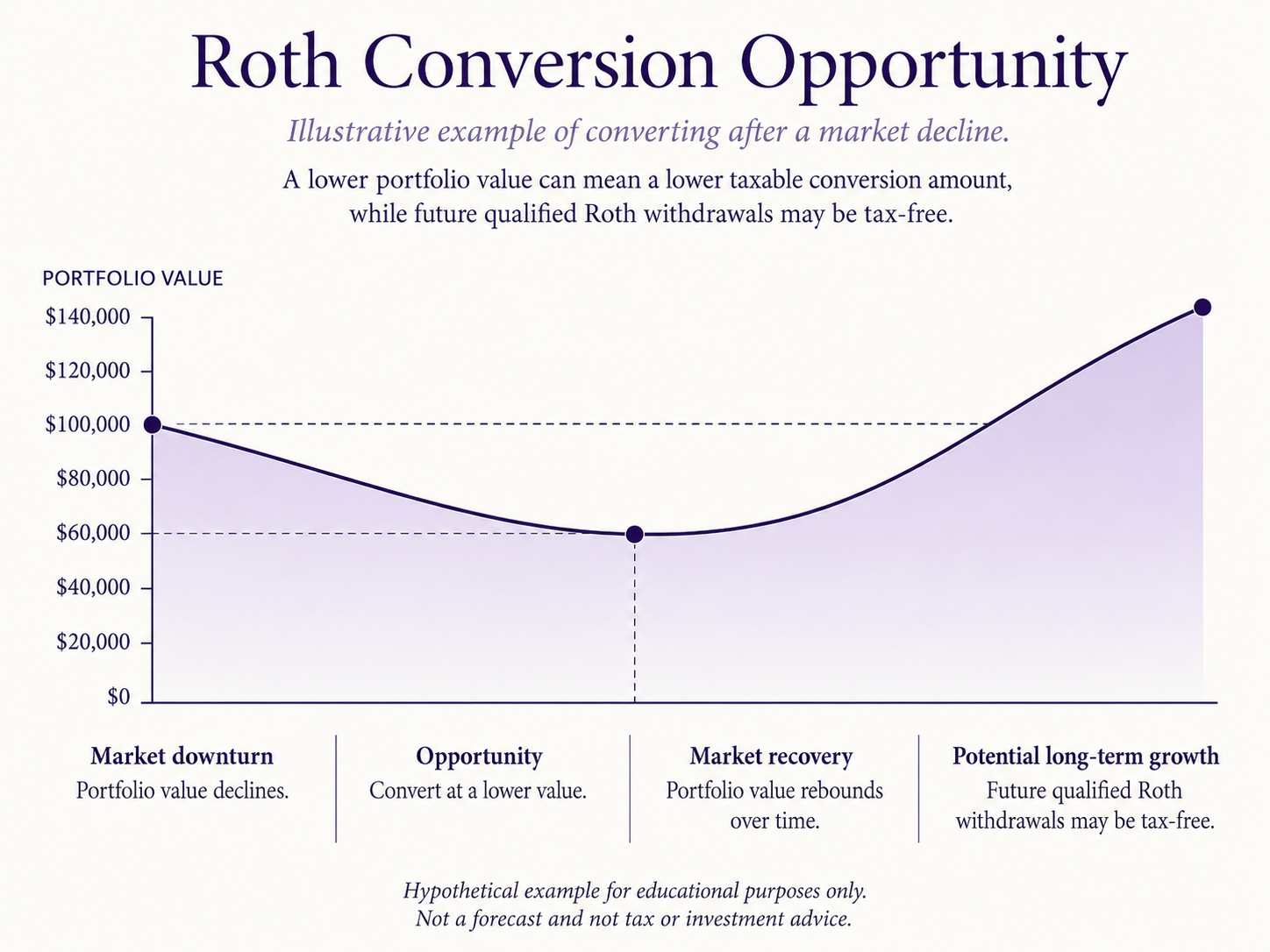
A Roth conversion moves all or part of eligible pre-tax retirement savings into a Roth IRA. The converted pre-tax amount is generally included in taxable income for that year, while future earnings and qualified withdrawals may receive tax-free treatment.
Adapted from Charles Schwab’s August 5, 2026 article by Hayden Adams, this guide explains how conversions differ from Roth IRA contributions, why conversion income limits and annual contribution limits do not apply in the same way, and why required minimum distributions cannot be converted.
It also reviews tax-bracket effects, Medicare premiums, Social Security taxation, tax credits and deductions, five-year withdrawal rules, partial conversions, backdoor Roth strategies, inherited IRAs, and situations in which a conversion may or may not make sense.
Open the PDF for the complete article, related Schwab resources, source attribution, important information, and Panorama and Quincy Wells disclosures.


